Prayatn Sanstha, with financial aid from Kindernothilfe, is implementing the Sambal Project in 50 villages of Cholapur Block, Varanasi district, Uttar Pradesh, to strengthen child protection systems and mechanism. Through the formation of Child Protection Committees (CPCs), Children’s Collectives (Bal Manch) and Self-Help Groups (SHGs), the project empowers communities to identify local issues, engage with government institutions and collectively work towards sustainable solutions.
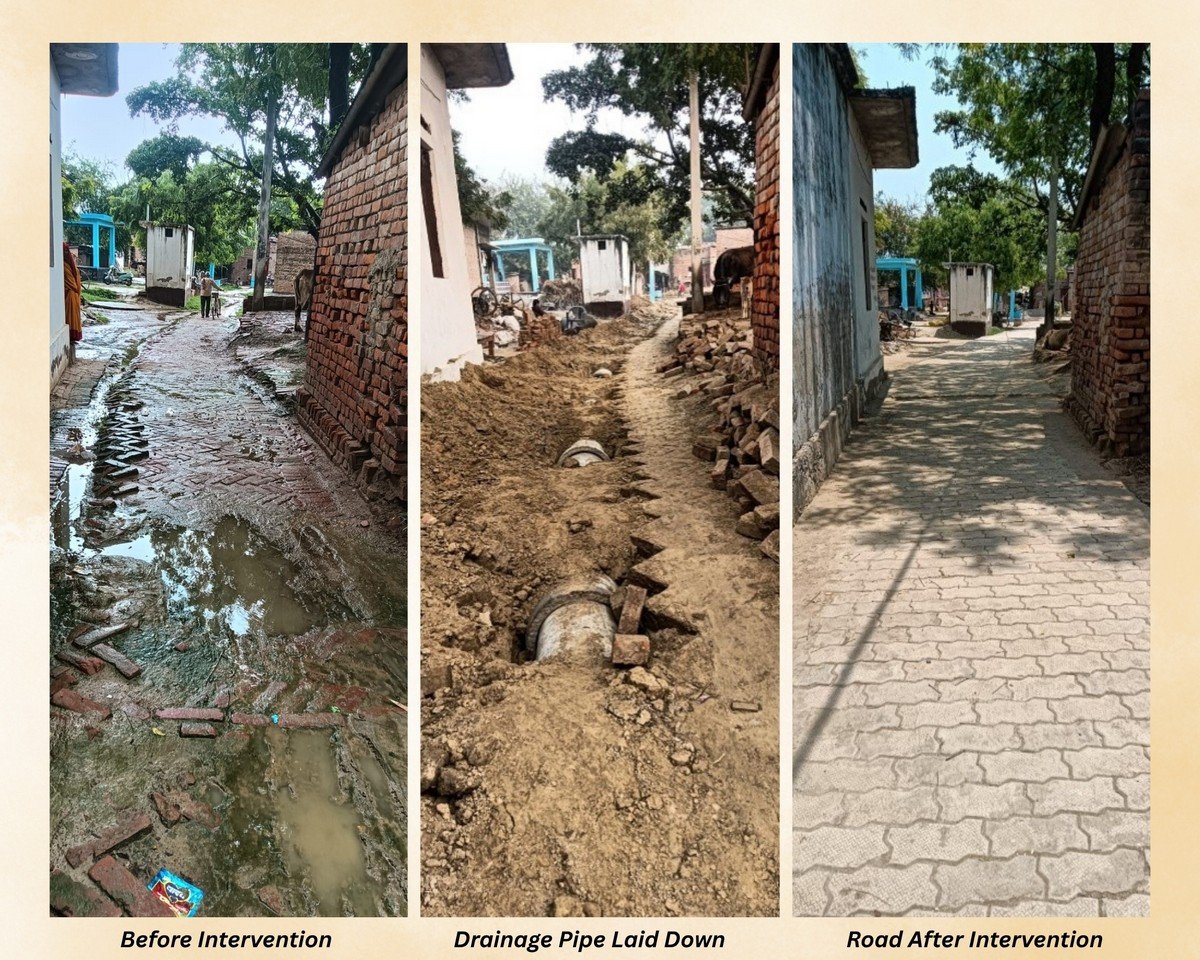
Mawaian Village had been facing a serious drainage and road problem near the Ambedkar Temple for several years. During the monsoon, the road between the houses of Dildar and Manju (Community Members) remained submerged in stagnant water, mud and garbage, making it almost impossible for villagers to move safely. Children were the worst affected, often slipping on the muddy road while going to school, resulting in frequent absenteeism during the rainy season. Women, elderly people and farmers also struggled to access essential services and carry out their daily activities. The stagnant water created unhygienic conditions, increasing the risk of water-borne diseases and threatening the health and safety of the entire community.
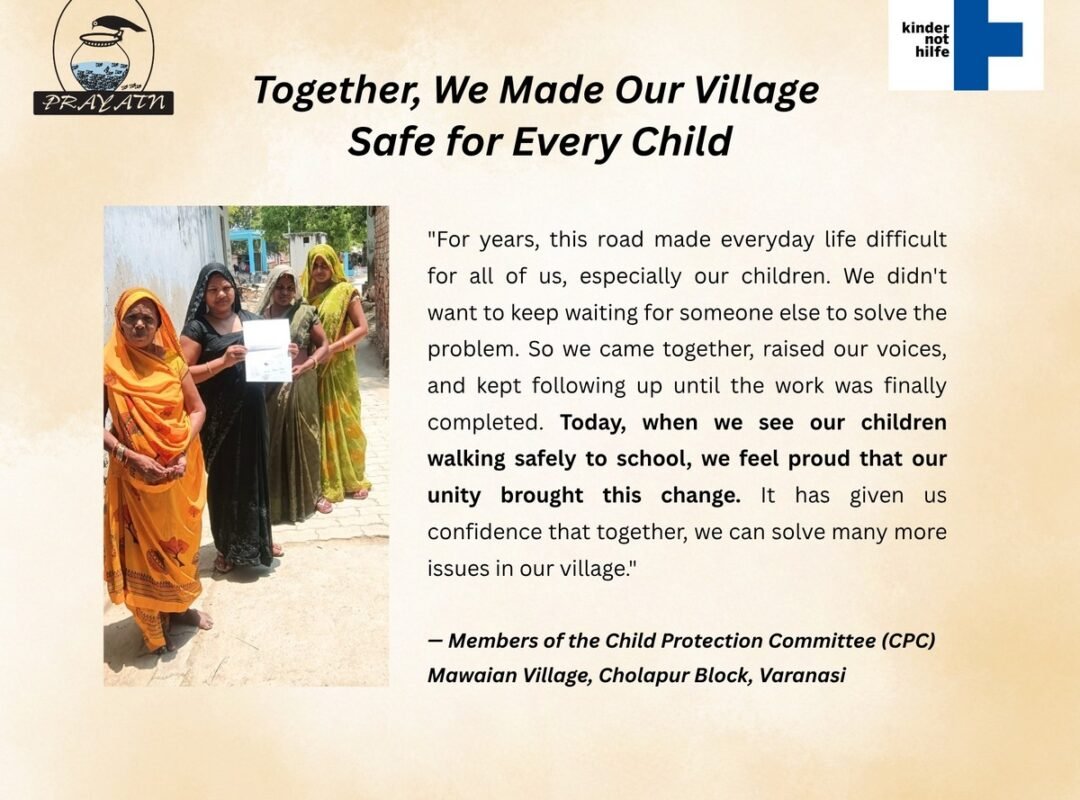
The issue was first identified by the Bal Manch during the Child-Led Indicator Development process and was subsequently discussed in the Child Protection Committee. Recognizing that safe roads and proper sanitation are essential for children’s well-being and education, the CPC included the issue in the Village Development Plan and submitted a written application to the Gram Pradhan. Despite repeated follow-ups through village meetings and Government–Community Interface platforms, no action was taken.
Determined to resolve the issue, the CPC sought support from the Cluster-level CPC Federation. Federation members joined the village CPC in raising the matter before the Block Development Officer and the Block-level Child Welfare Committee. When the problem continued unresolved, they escalated it to the district Administration. Demonstrating strong community ownership, local Self-Help Groups contributed ₹1,000 towards travel and documentation expenses, enabling community representatives to submit a formal proposal to the District Development Office.
The continuous advocacy and collective efforts of the CPC, CPC Federation and community members finally resulted in administrative approval. Construction work began in December 2025 and included the construction of a drainage outlet, road strengthening, brick lining and levelling. The work was completed in February 2026, permanently resolving the long-standing problem.
Today, children can attend school safely throughout the year without fear of slipping or wading through stagnant water. Improved drainage has eliminated waterlogging, reduced health risks and created a cleaner environment for families. The initiative not only transformed the village infrastructure but also demonstrated the strength of community-led advocacy. The successful collaboration between the CPC, CPC Federation, SHGs and local administration has strengthened community confidence and moved Mawaian Village another step closer to becoming a Child-Friendly Village.