Initiatives of Prayatn
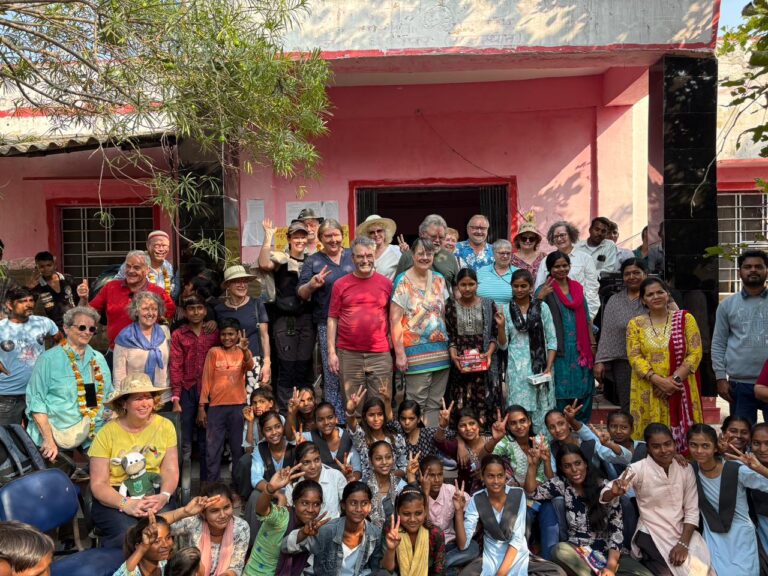
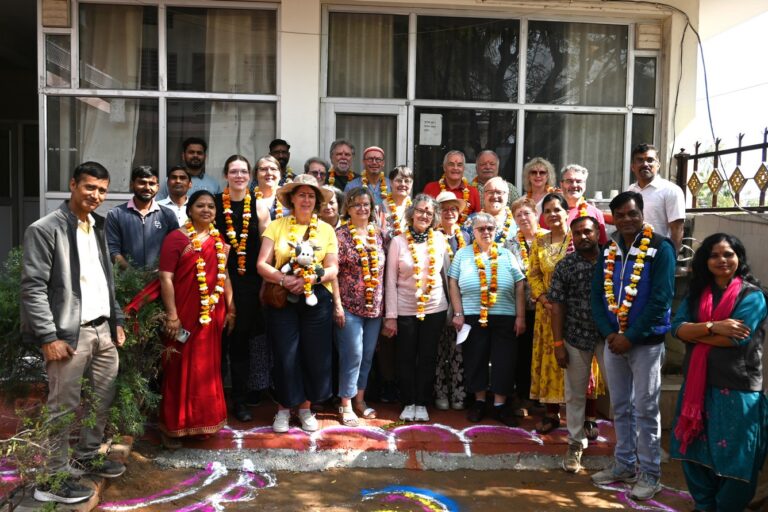
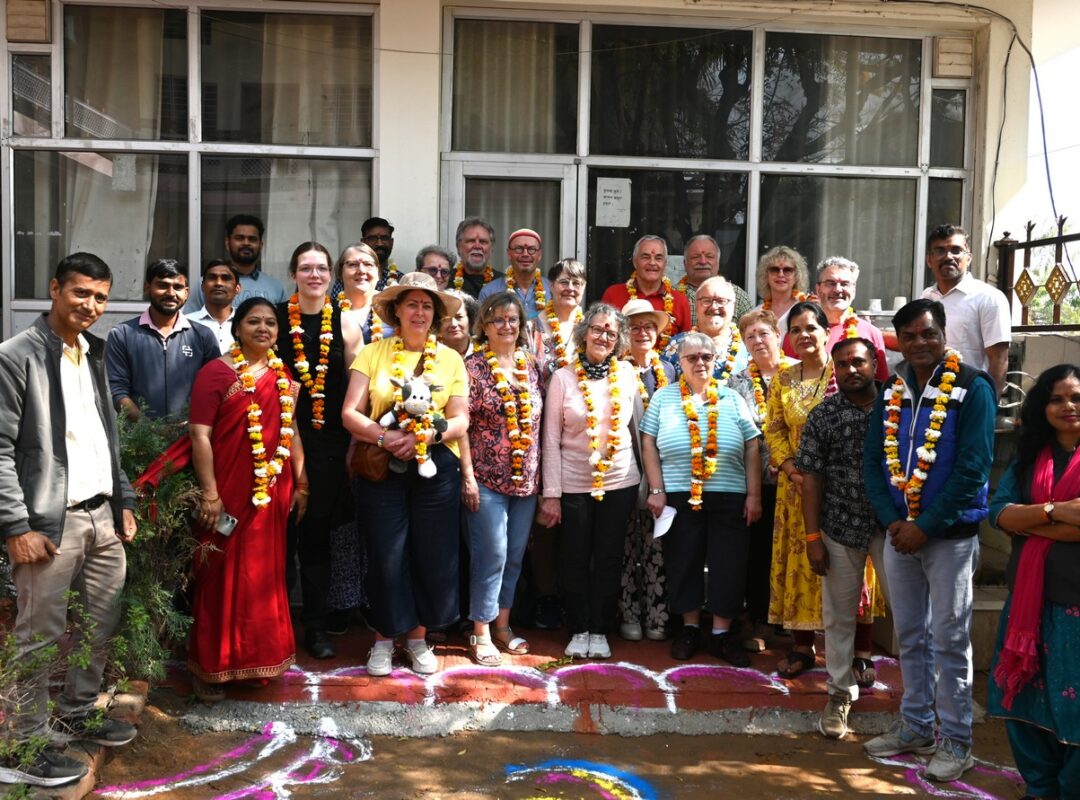
On 24th February 2026, a group of 19 representatives led by Mr. Ralph Tapel, retired Executive Director, Karl Kubel Stiftung, Germany visited Prayatn Sanstha for an exposure visit to understand its grassroots interventions and community-led development initiatives in the Dholpur region of Rajasthan.
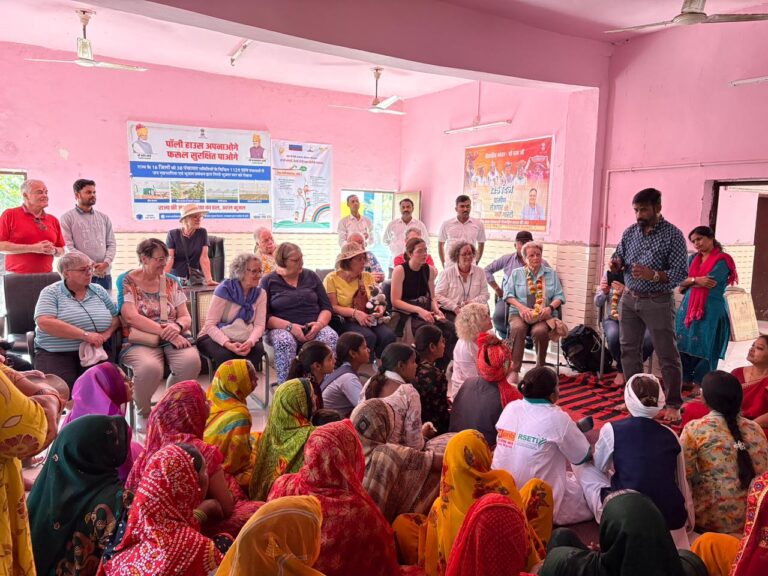
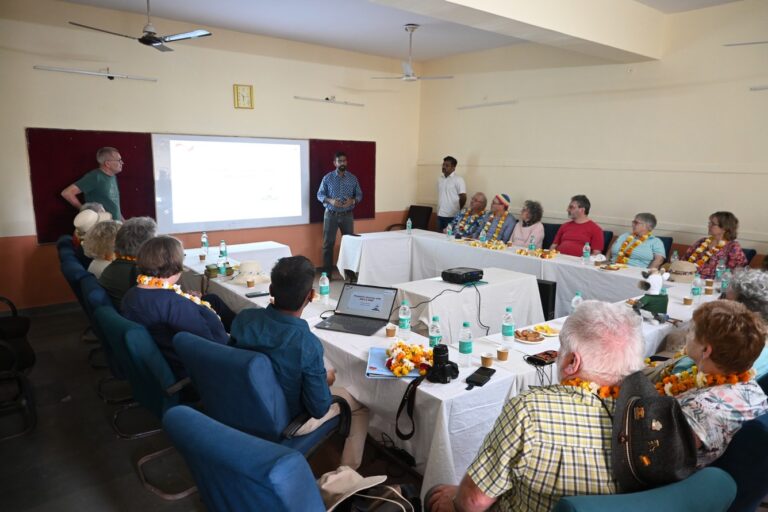
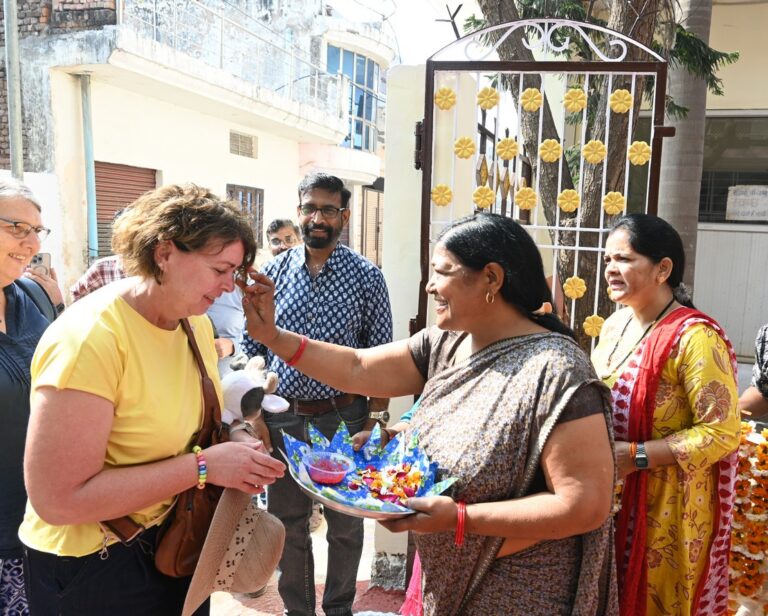
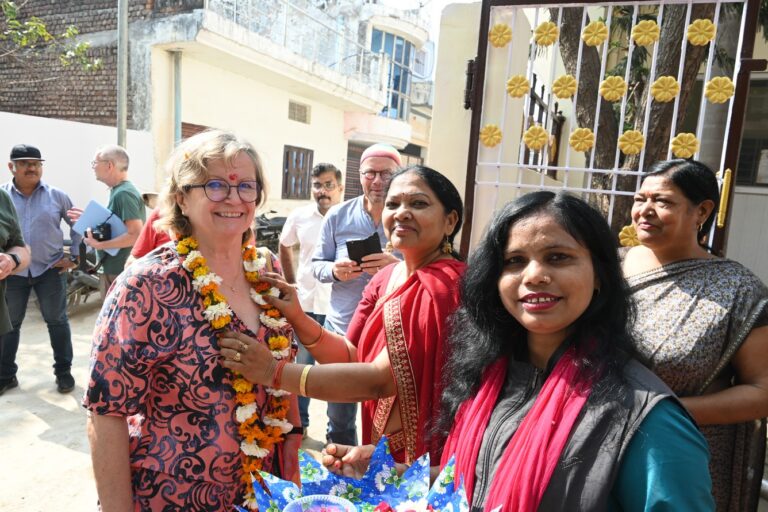
The visit commenced with a traditional welcome at the Prayatn Dholpur Office, where the guests were facilitated as a gesture of respect. This was followed by an introductory and briefing session led by Mr. Malay Kumar, Secretary of the organization, along with the Prayatn team. During the session, the delegation was taken through the journey of collaboration between Karl Kübel Stiftung (KKS) and Prayatn Sanstha from 2011 to 2024. The discussion highlighted how the work gradually evolved from direct community interventions to structured engagement with government systems at block and district levels. Key focus areas such as child labour, child protection, education in Dholpur region and malnutrition in Shahabad region were discussed, along with the establishment of strong village-level community institutions.
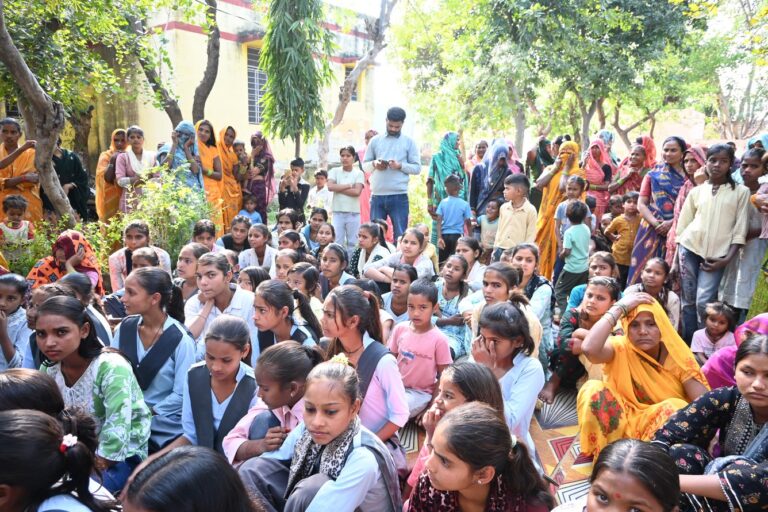
Following the briefing, the delegation proceeded to Basai Samanta village for field exposure. Community members welcomed them warmly and the team interacted with representatives of the Village Development Committee, Child Protection Committees, Self-Help Groups (SHGs) and the Children’s Collective. Discussions centred on how these institutions function collectively to prevent child marriage, reduce child labour and promote awareness of child rights through regular meetings, counselling, community monitoring and social accountability measures.
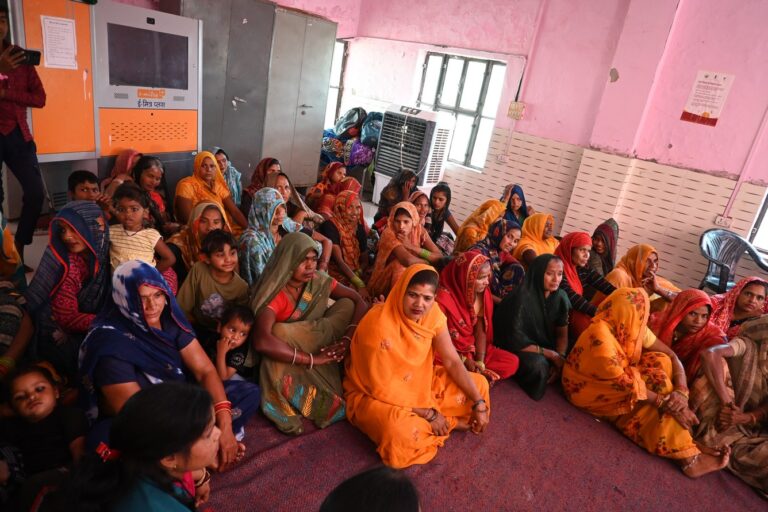
Women from SHGs shared their journey from facing challenges such as child marriage, alcoholism, unsafe travel for education and limited awareness to now leading change through organized community platforms. They explained how collective decision-making, counselling and locally developed social regulations have resulted in visible change, including better school attendance, reduced child labour, improved cleanliness and strengthened access to basic services.
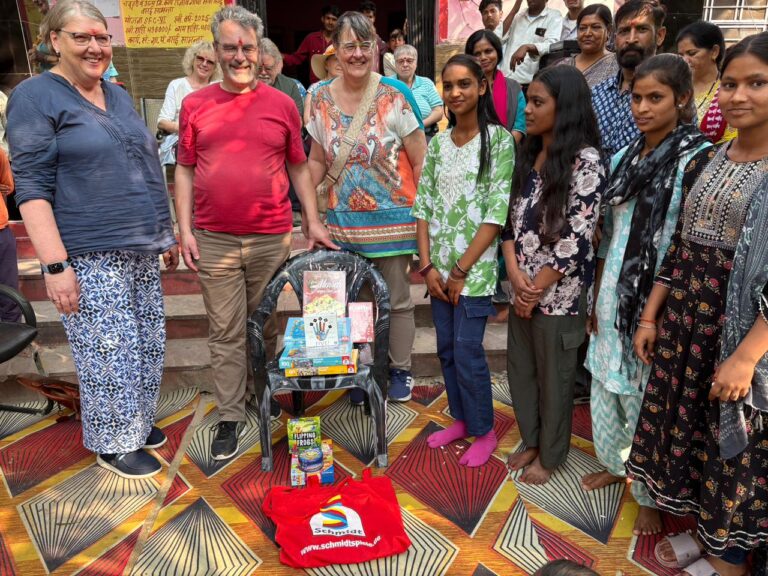
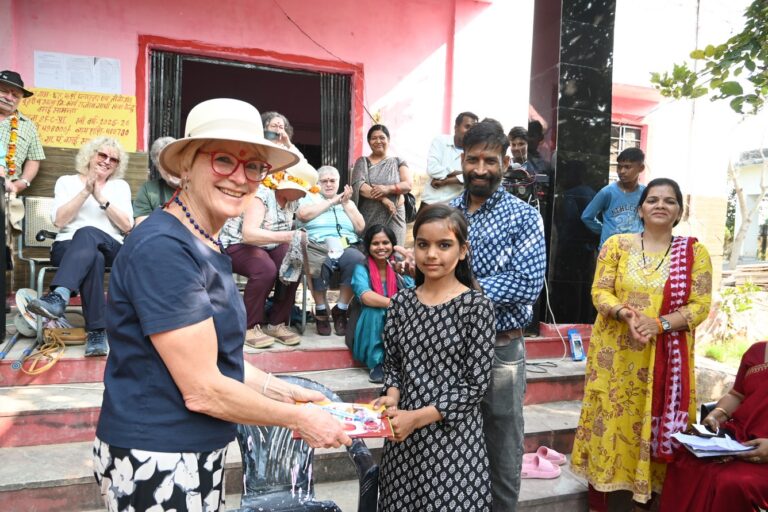
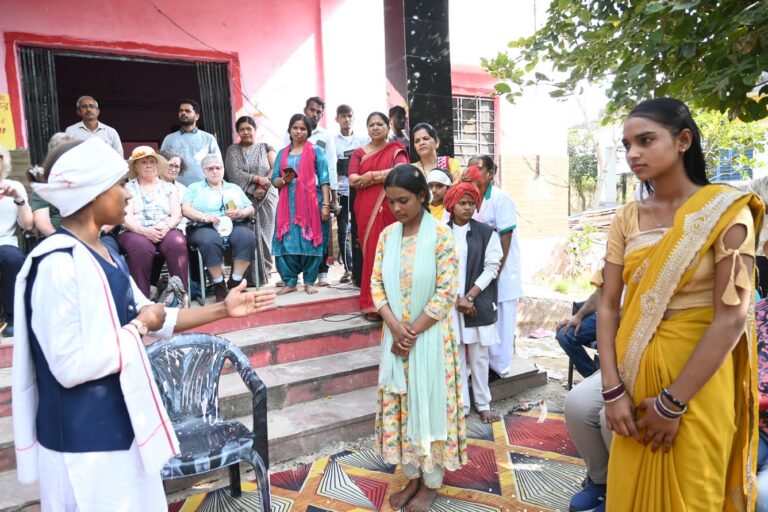
Children of the Children’s Collective confidently interacted with the delegation and presented a powerful role play on child marriage, highlighting its consequences and the importance of education. Their clarity, awareness and confidence left a strong impression on the visitors. The delegation also distributed playing materials to children collective to encourage children’s participation and overall development.
The team further observed local livelihood and production practices contributing to community development.
During the debriefing session, the delegation appreciated the visible transformation driven by community institutions and acknowledged the sustained impact even after project completion. They noted that the continued functioning of village committees reflects strong community ownership and long-term change. The visit concluded with mutual appreciation and a shared commitment to strengthening participatory and community-led development processes.